Because of you…

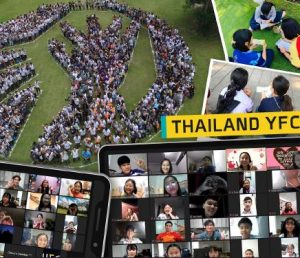
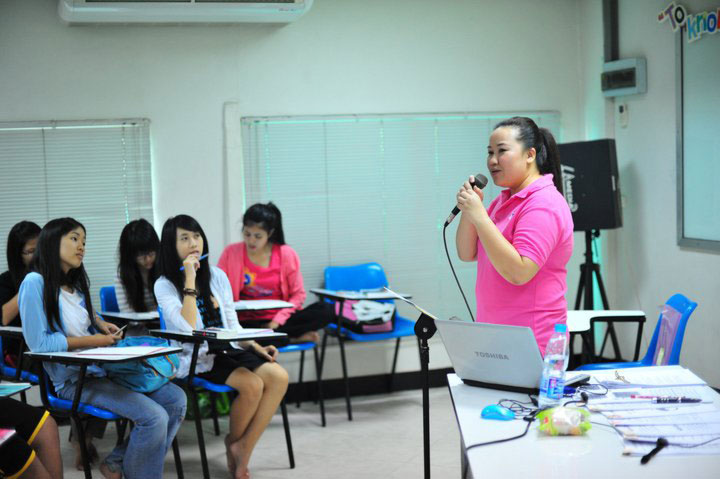
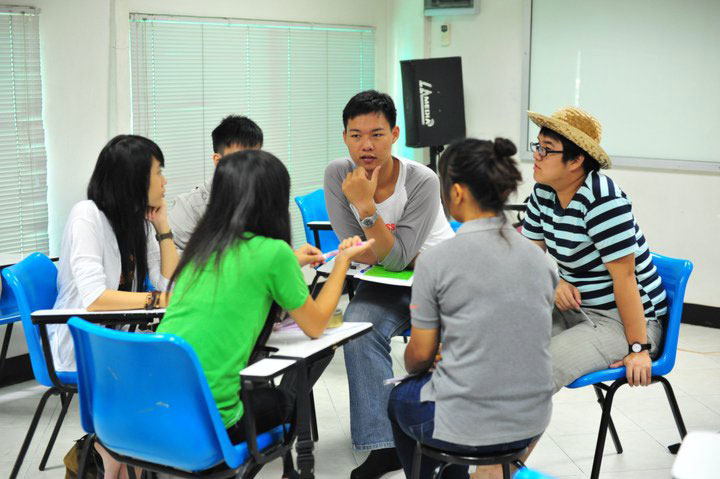
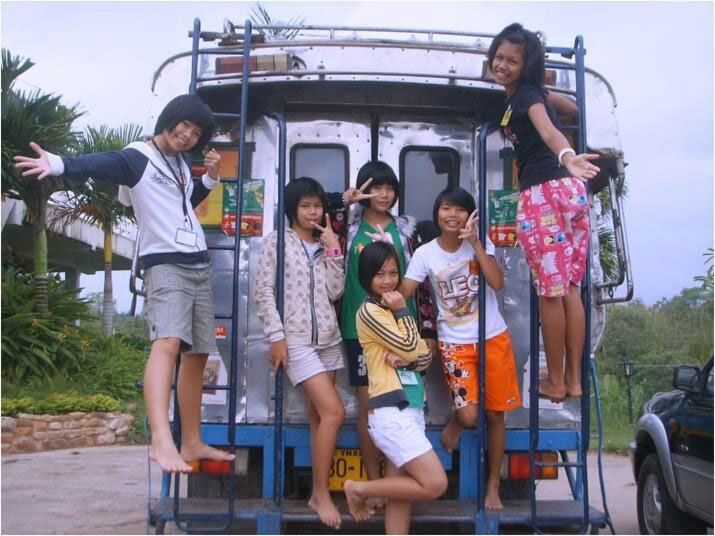
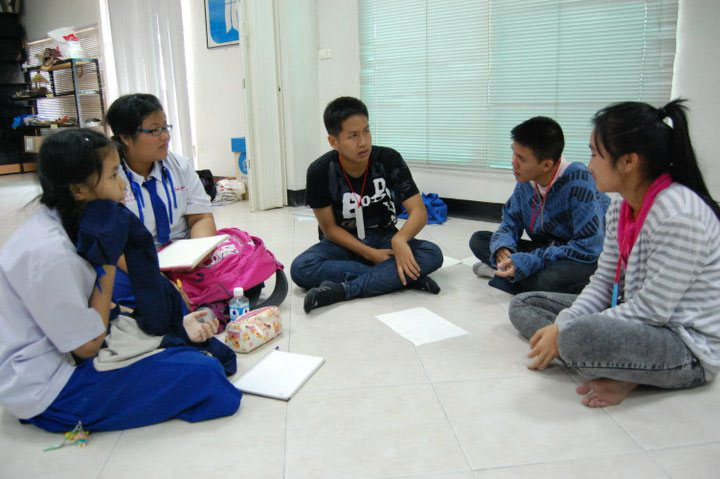
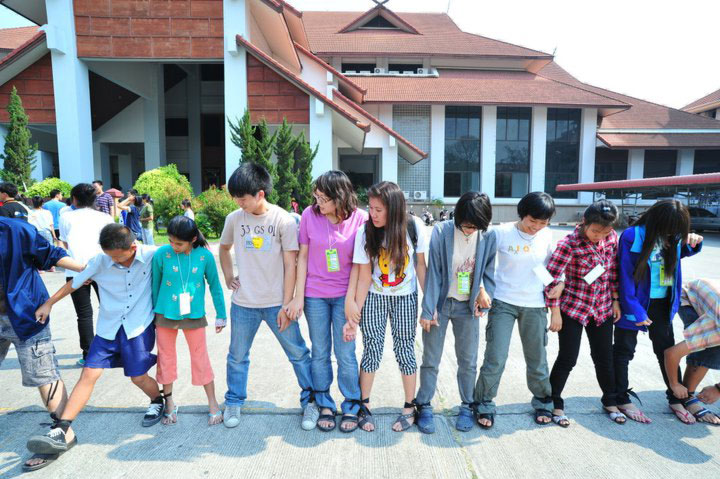
Ministry to the young people of Thailand includes student ministry, English classes and camp, mission teams, performing arts and a hotline.

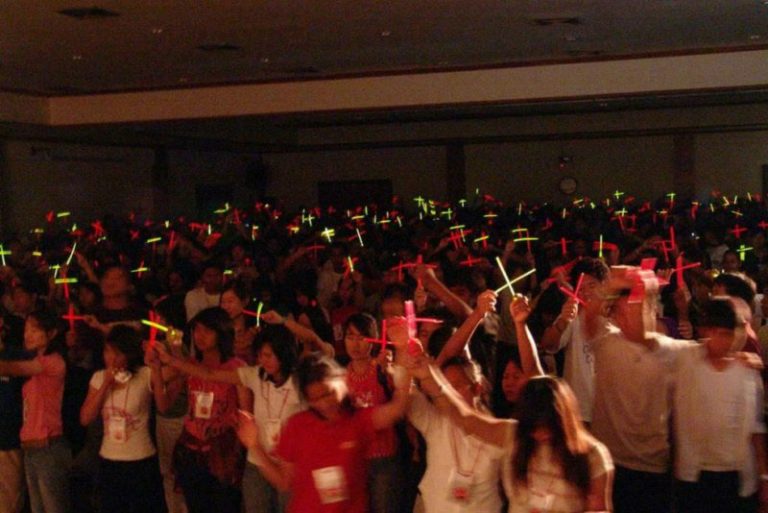
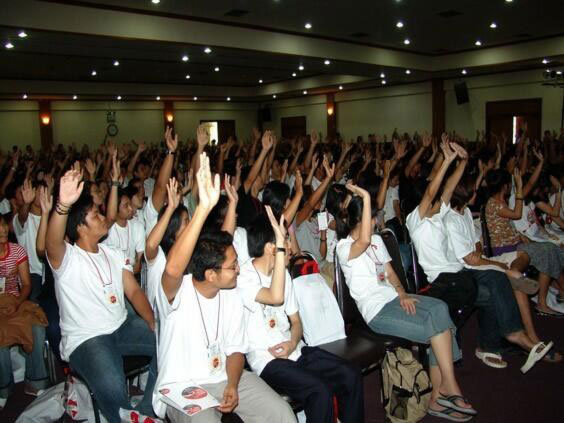
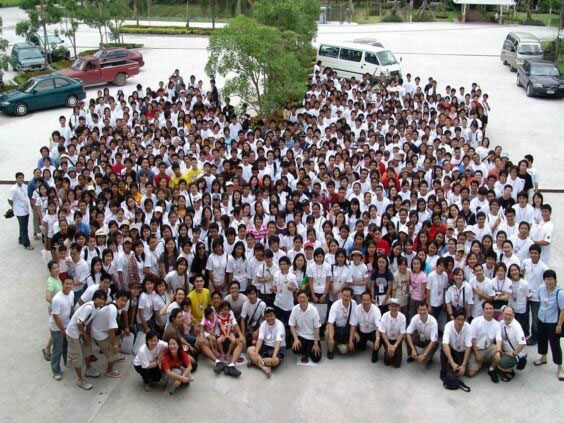
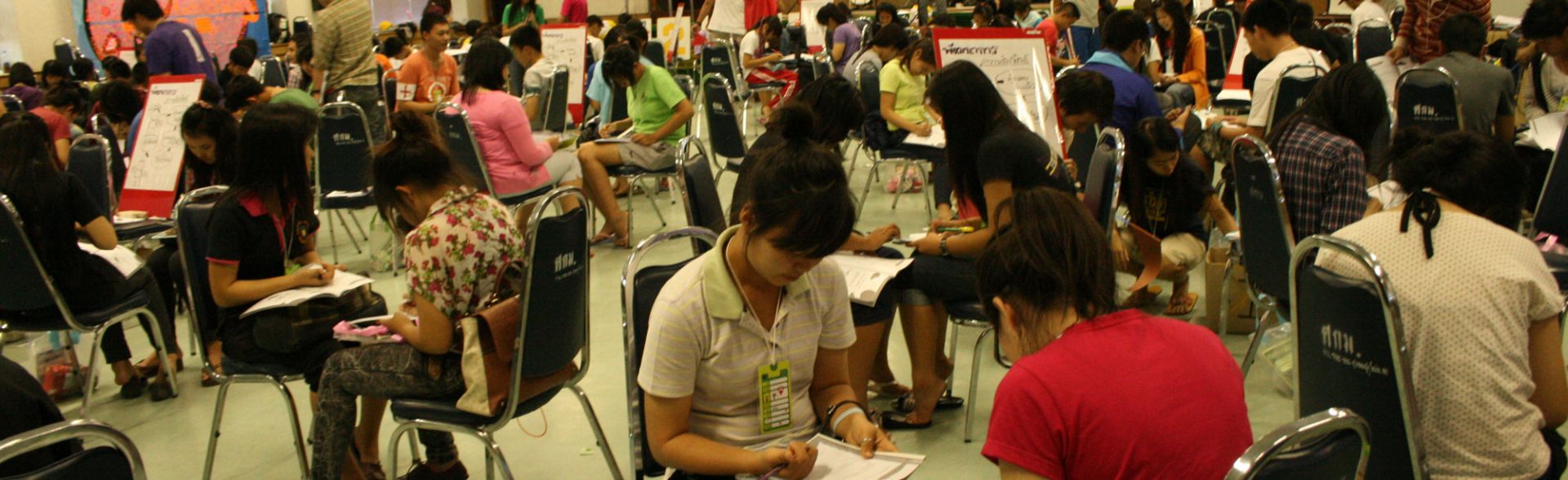
Youth for Christ has a very effective two-part ministry focus-Christian Training and Outreach. Christian Training focuses on mobilizing youth evangelism through church and youth training. They produce and distribute materials that are sent over 2,000 churches in Thailand. In addition, Youth for Christ conducts large, bi-annual youth conferences that alternate their focus between challenging college-aged students to consider full-time ministry one year and equipping and challenging high school-aged youth to share their faith and reach others the next year.

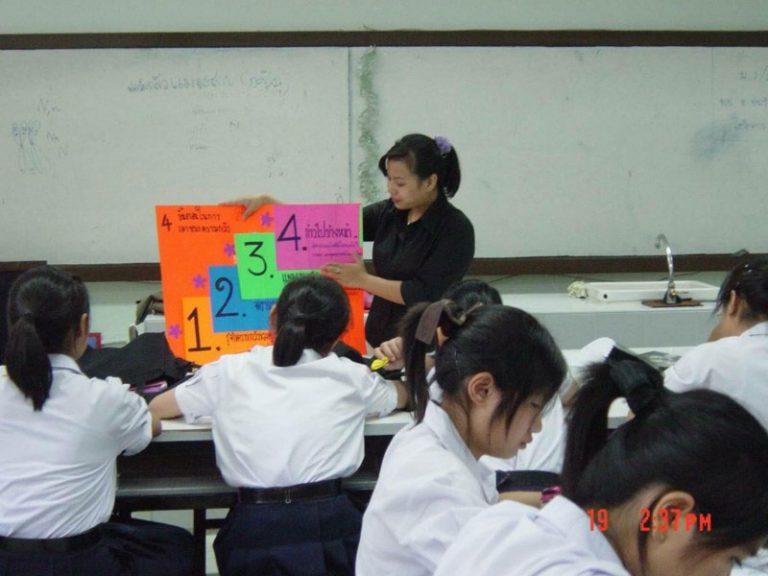
Over half of our staff and volunteers focus on Outreach efforts to young people. From three centers across Thailand, staff and volunteers are building relationships with young people in schools and universities and sharing the love of Christ. The Bangkok ministry centre is located adjacent to a 20,000-person university. So, there is no shortage of young people to work with.

Prayer Needs

  • Wisdom in developing outreach packages for schools and colleges
  • Lifeskills center development where many types of training will be offered for young people
  • Continued effective ministry to the young
  • Increase in networking with local churches and organizations to maximize service to young people
  • Continued development of staff and volunteers
About Thailand

Thailand

Map of Thailand

Introduction

A unified Thai kingdom was established in the mid-14th century. Known as Siam until 1939, Thailand is the only Southeast Asian country never to have been taken over by a European power. A bloodless revolution in 1932 led to a constitutional monarchy. In alliance with Japan during World War II, Thailand became a US treaty ally following the conflict. A military coup in September 2006 ousted then Prime Minister THAKSIN Chinnawat. The interim government held elections in December 2007 that saw the former pro-THAKSIN People's Power Party (PPP) emerge at the head of a coalition government. The anti-THAKSIN People's Alliance for Democracy (PAD) in May 2008 began street demonstrations against the new government, eventually occupying the prime minister's office in August and Bangkok's two international airports in November. The PAD ended their protests in early December 2008 following a court ruling that dissolved the ruling PPP and two other coalition parties for election violations. The Democrat Party then formed a new coalition government and ABHISIT Wetchachiwa became prime minister. In October 2008 THAKSIN went into voluntary exile to avoid imprisonment for a corruption conviction, and has since agitated his followers from abroad. THAKSIN supporters re-organized into the United Front for Democracy Against Dictatorship (UDD) and rioted in April 2009, shutting down an ASEAN meeting in Phuket, and in early 2010 protested a court verdict confiscating most of THAKSIN's wealth. Since January 2004, thousands have been killed as separatists in Thailand's southern ethnic Malay-Muslim provinces increased the violence associated with their cause.

Geography

Location

Location: Southeastern Asia, bordering the Andaman Sea and the Gulf of Thailand, southeast of Burma
Geographic Coordinates: 15 00 N, 100 00 E

Area

Total Area: 513,120 sq km Rank: 50
Land Area: 510,890 sq km
Water Area: 2,230 sq km
Comparison: slightly more than twice the size of Wyoming
Land Boundaries: 4,863 km
Bordering Countries: Burma 1,800 km, Cambodia 803 km, Laos 1,754 km, Malaysia 506 km
Coastline: 3,219 km

Climate

tropical; rainy, warm, cloudy southwest monsoon (mid-May to September); dry, cool northeast monsoon (November to mid-March); southern isthmus always hot and humid

Terrain

central plain; Khorat Plateau in the east; mountains elsewhere

Elevations

Lowest Point: Gulf of Thailand 0 m
Highest Point: Doi Inthanon 2,576 m

Natural Resources

tin, rubber, natural gas, tungsten, tantalum, timber, lead, fish, gypsum, lignite, fluorite, arable land

Land Use

Arable land: 27.54%
Permanent Crops: 6.93%
Other: 65.53% (2005)
Irrigated Land: 49,860 sq km (2003)
Renewable Water Resources: 409.9 cu km (1999)
Total Freshwater withdrawal (domestic/industrial/agricultural): 82.75 cu km/yr (2%/2%/95%)
Freshwater Withdrawal Per Capita: 1,288 cu m/yr (2000)

Environment

Natural Hazards: land subsidence in Bangkok area resulting from the depletion of the water table; droughts
Environmental Issues: air pollution from vehicle emissions; water pollution from organic and factory wastes; deforestation; soil erosion; wildlife populations threatened by illegal hunting
Environmental Agreements: Party to: Biodiversity, Climate Change, Climate Change-Kyoto Protocol, Desertification, Endangered Species, Hazardous Wastes, Marine Life Conservation, Ozone Layer Protection, Tropical Timber 83, Tropical Timber 94, Wetlands

Geography Notes

controls only land route from Asia to Malaysia and Singapore

People

Population: 65,998,436 Rank: 20
Note: estimates for this country explicitly take into account the effects of excess mortality due to AIDS; this can result in lower life expectancy, higher infant mortality, higher death rates, lower population growth rates, and changes in the distribution of population by age and sex than would otherwise be expected (July 2010 est.)

Age Structure

0-14 years: 20.8% (male 7,013,877/female 6,690,554)
15-64 years: 70.5% (male 23,000,156/female 23,519,298)
65 years and over: 8.7% (male 2,612,269/female 3,162,282) (2010 est.)
Median Age: 33.2 years

Population Growth

Growth Rate: 0.626% (2010 est.) Rank: 150
Birth Rate: 13.38 births/1,000 population (2010 est.) Rank: 156
Death Rate: 7.12 deaths/1,000 population (July 2010 est.) Rank: 128
Net Migration Rate: NA

Urbanization

Urban Population: 33% of total population (2008)
Rate of Urbanization: 1.7% annual rate of change (2005-10 est.)

Life and Death

Infant Mortality Rate: 17.48 deaths/1,000 live births Rank: 114
Life Expectancy at Birth: 73.1 years Rank: 113
Fertility Rate: 1.65 children born/woman (2010 est.) Rank: 178

Health and Disease

HIV/AIDS - Adult Prevalence Rate: 1.4% (2007 est.) Rank: 46
People living with HIV/AIDS: 610,000 (2007 est.) Rank: 18
HIV/AIDS Deaths: 30,000 (2007 est.) Rank: 17
Degree of Risk for Major Infectious Diseases: high
Food or waterborne diseases: bacterial diarrhea
Vectorborne Diseases: dengue fever, Japanese encephalitis, and malaria
Animal Contact Diseases: rabies
Water Contact Diseases: leptospirosis
Note: highly pathogenic H5N1 avian influenza has been identified in this country; it poses a negligible risk with extremely rare cases possible among US citizens who have close contact with birds (2009)

Nationality and Culture

Noun: Thai (singular and plural)
Adjective: Thai
Ethnic Groups: Thai 75%, Chinese 14%, other 11%
Religion: Buddhist 94.6%, Muslim 4.6%, Christian 0.7%, other 0.1% (2000 census)
Languages: Thai, English (secondary language of the elite), ethnic and regional dialects

Education

Literacy (Meaning, age 15 and over can read and write): 92.6% Male: 94.9% Female: 90.5% (2000 census)
School life expectancy (primary to tertiary education): 14 years Male: 13 years Female: 14 years (2006)
Education expenditures: 4.2% of GDP (2005) Rank: 99

Government

Country Name

Conventional Long Form: Kingdom of Thailand
Conventional Short Form: Thailand
Local Long Form: Ratcha Anachak Thai
Local Short Form: Prathet Thai
Formerly: Siam
Government Type: constitutional monarchy
Capital: Bangkok Geographic Coordinates: 13 45 N, 100 31 E

Administrative divisions

76 provinces (changwat, singular and plural); Amnat Charoen, Ang Thong, Buriram, Chachoengsao, Chai Nat, Chaiyaphum, Chanthaburi, Chiang Mai, Chiang Rai, Chon Buri, Chumphon, Kalasin, Kamphaeng Phet, Kanchanaburi, Khon Kaen, Krabi, Krung Thep Mahanakhon (Bangkok), Lampang, Lamphun, Loei, Lop Buri, Mae Hong Son, Maha Sarakham, Mukdahan, Nakhon Nayok, Nakhon Pathom, Nakhon Phanom, Nakhon Ratchasima, Nakhon Sawan, Nakhon Si Thammarat, Nan, Narathiwat, Nong Bua Lamphu, Nong Khai, Nonthaburi, Pathum Thani, Pattani, Phangnga, Phatthalung, Phayao, Phetchabun, Phetchaburi, Phichit, Phitsanulok, Phra Nakhon Si Ayutthaya, Phrae, Phuket, Prachin Buri, Prachuap Khiri Khan, Ranong, Ratchaburi, Rayong, Roi Et, Sa Kaeo, Sakon Nakhon, Samut Prakan, Samut Sakhon, Samut Songkhram, Sara Buri, Satun, Sing Buri, Sisaket, Songkhla, Sukhothai, Suphan Buri, Surat Thani, Surin, Tak, Trang, Trat, Ubon Ratchathani, Udon Thani, Uthai Thani, Uttaradit, Yala, Yasothon
Independence: 1238 (traditional founding date; never colonized)
National holiday: Birthday of King PHUMIPHON (BHUMIBOL), 5 December (1927)
Constitution: 24 August 2007
Legal system: based on civil law system with influences of common law; has not accepted compulsory ICJ jurisdiction
Suffrage: 18 years of age; universal and compulsory

Executive Branch

Chief of State: King PHUMIPHON Adunyadet, also spelled BHUMIBOL Adulyadej (since 9 June 1946)
Head of Government: Prime Minister ABHISIT Wetchachiwa, also spelled ABHISIT Vejjajiva (since 17 December 2008); Deputy Prime Minister SANAN Kachornprasat, also spelled SANAN Kachornparsart (since 7 February 2008); Deputy Prime Minister SUTHEP Thueaksuban, also spelled SUTHEP Thaugsuban (since 22 December 2008); Deputy Prime Minister TRAIRONG Suwannakhiri (since 18 January 2010)
Cabinet: there is also a Privy Council advising the king
Note: Council of Ministers
Elections: the monarchy is hereditary; according to 2007 constitution, the prime minister elected from among members of House of Representatives; following national elections for House of Representatives, the leader of the party positioned to organize a majority coalition usually becomes prime minister by appointment by the king; the prime minister limited to two four-year terms

Legislative Branch

bicameral National Assembly or Rathasapha consisted of the Senate or Wuthisapha (150 seats; 76 members elected by popular vote representing 76 provinces, 74 appointed by judges and independent government bodies; members serve six-year terms) and the House of Representatives or Sapha Phuthaen Ratsadon (480 seats; 400 members elected from 157 multi-seat constituencies and 80 elected on proportional party-list basis of 10 per eight zones or groupings of provinces; members serve four-year terms)
Elections: Senate - last held on 2 March 2008 (next to be held in March 2014); House of Representatives - last election held on 23 December 2007 (next to be held by December 2011)
Election Results: Senate - percent of vote by party - NA; seats by party - NA; House of Representatives - percent of vote by party - NA; seats by party - PPP 233, DP 164, TNP 34, Motherland 24, Middle Way 11, Unity 9, Royalist People's 5; following the PPP's dissolution in December 2008, most of the party's seats were assumed by its successor, the Phuea Thai Party
Note: 74 senators were appointed on 19 February 2008 by a seven-member committee headed by the chief of the Constitutional Court; 76 senators were elected on 2 March 2008; elections to the Senate are non-partisan; registered political party members are disqualified from being senators

Judicial Branch

Constitutional Court, Supreme Court of Justice, and Supreme Administrative Court; all judges are appointed by the king; the king's appointments to the Constitutional Courtare made upon the advice of the Senate; the nine Constitutional Court judges are drawn from the Supreme Court of Justice and Supreme Administrative Court as well as from among substantive experts in law and social sciences outside the judiciary

Politics

Political Parties and Leaders: Chat Thai Phattana Party or CP (Thai Nation Development Party) [CHUMPON Silpa-archa]; Democrat Party or DP (Prachathipat Party) [ABHISIT Wetchachiwa, also spelled ABHISIT Vejjajiva]; Motherland Party (Phuea Phaendin Party) [CHANCHAI Chairungrueng]; Phuea Thai Party (For Thais Party) or PTP [YONGYUTH Wichaidit]; Phumchai (Bhumjai) Thai Party or PCT (Thai Pride) [CHAWARAT Chanvirakun]; Royalist People's Party (Pracharaj) [SANOH Thienthong]; Ruam Jai Thai Party (Thai Unity Party) [WANNARAT Channukun]
Political Pressure Groups and Leaders: People's Alliance for Democracy or PAD; United Front for Democracy Against Dictatorship or UDD
International Organization Participation: ADB, APEC, APT, ARF, ASEAN, BIMSTEC, BIS, CICA, CP, EAS, FAO, G-77, IAEA, IBRD, ICAO, ICC, ICCt (signatory), ICRM, IDA, IFAD, IFC, IFRCS, IHO, ILO, IMF, IMO, IMSO, Interpol, IOC, IOM, IPU, ISO, ITSO, ITU, ITUC, MIGA, NAM, OAS (observer), OIC (observer), OIF (observer), OPCW, OSCE (partner), PCA, PIF (partner), UN, UNAMID, UNCTAD, UNESCO, UNHCR, UNIDO, UNMIS, UNWTO, UPU, WCO, WFTU, WHO, WIPO, WMO, WTO
Flag Description: five horizontal bands of red (top), white, blue (double width), white, and red; the red color symbolizes the nation and the blood of life; white represents religion and the purity of Buddhism; blue stands for the monarchy
Note: similar to the flag of Costa Rica but with the blue and red colors reversed

Economy

Economy Overview: With a well-developed infrastructure, a free-enterprise economy, generally pro-investment policies, and strong export industries, Thailand enjoyed solid growth from 2000 to 2008 - averaging more than 4% per year - as it recovered from the Asian financial crisis of 1997-98. Thai exports - mostly machinery and electronic components, agricultural commodities, and jewelry - continue to drive the economy, accounting for more than half of GDP. The global financial crisis of 2008-09 severely cut Thailand's exports, with most sectors experiencing double-digit drops. In 2009, the economy contracted 2.8%. The Thai government is focusing on financing domestic infrastructure projects and stimulus programs to revive the economy, as external trade is still recovering and persistent internal political tension and investment disputes threaten to damage the investment climate.

Gross Domestic Product

GDP (purchasing power parity): $540.1 billion (2009 est.) Rank: 25
GDP - real growth rate: -2.2% (2009 est.) Rank: 150
GDP - per capita (PPP): $8,200 (2009 est.) Rank: 119
GDP - Composition by Sector: Agriculture: 11.6% Industry: 43.3% Services: 45.1% (2009 est.)

Labor Force

Labor Force: 38.43 million (2009 est.) Rank: 15
Labor force - by occupation: Agriculture: 42.4% Industry: 19.7% Services: 37.9% (2008 est.)
Unemployment Rate: 1.5% (2009 est.) Rank: 7

Poverty

Population below poverty line: 9.6% (2006 est.)
country comparison to the world: 49
$7.013 billion (31 December 2007 est.)
total: 180,053 km (includes 450 km of expressways) (2006)
country comparison to the world: 27

Transnational Issues

International Disputes: separatist violence in Thailand's predominantly Muslim southern provinces prompt border closures and controls with Malaysia to stem terrorist activities; Southeast Asian states have enhanced border surveillance to check the spread of avian flu; talks continue on completion of demarcation with Laos but disputes remain over several islands in the Mekong River; despite continuing border committee talks, Thailand must deal with Karen and other ethnic rebels, refugees, and illegal cross-border activities, and as of 2006, over 116,000 Karen, Hmong, and other refugees and asylum seekers from Burma; Cambodia and Thailand dispute sections of historic boundary with missing boundary markers; Cambodia claims Thai encroachments into Cambodian territory and obstructing access to Preah Vihear temple ruins awarded to Cambodia by ICJ decision in 1962; Thailand is studying the feasibility of jointly constructing the Hatgyi Dam on the Salween river near the border with Burma; in 2004, international environmentalist pressure prompted China to halt construction of 13 dams on the Salween River that flows through China, Burma, and Thailand
Refugees and internally displaced persons - refugees (country of origin): 132,241 (Burma) (2007)

Want to know more? Show Full Profile